

The term hydrofluoroolefins" (HFO), which are also often referred to as the "fourth generation refrigerants", entered the cooling technology industry in 2013, when common use of the refrigerant R1234yf was started in automobile air conditioning. It was only a matter of time before the fourth generation refrigerants appeared – the previously common refrigerants from the HFC (hydrofluorocarbons) group are mostly greenhouse gases with a high GWP (Global Warming Potential). Pursuant to the Kigali Amendment to the Montreal Protocol and in accordance with the EU Regulation 517/2014 (so called F-gas Regulation), such substances are gradually withdrawn from production and use. That is why it was necessary to find an alternative.
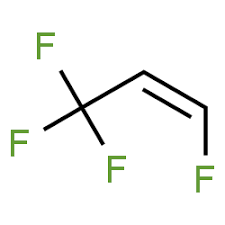
As a brief chemistry revision, hydrofluoroolefins are derivates of the unsaturated hydrocarbon – propylene (propene) – and are designated as R1234yf. They have one double carbon bond and two hydrogen atoms, three carbon atoms and four fluorine atoms, which are variously distributed within the molecule – that is why the compound occurs in several isomers with appropriate letter designations and significant differences in terms of physical properties. R1234yf and R1234ze are the most important in cooling technology. Their common characteristic include a very low GWP (4 and 7 respectively) that results from the double chemical bond between the carbon atoms. However, obtaining such beneficial values is not without a cost – this very double carbon bond is also responsible for the refrigerants` slight flammability. In accordance with the EN 378 standard, they are classified as A2L – slightly flammable (an A2L class refrigerant is characterized by flame propagation under test conditions in air at 60°C and 101.3 kPa, at max combustion speed ≤10 cm/s under the test conditions of 23°C and 101.3 kPa).
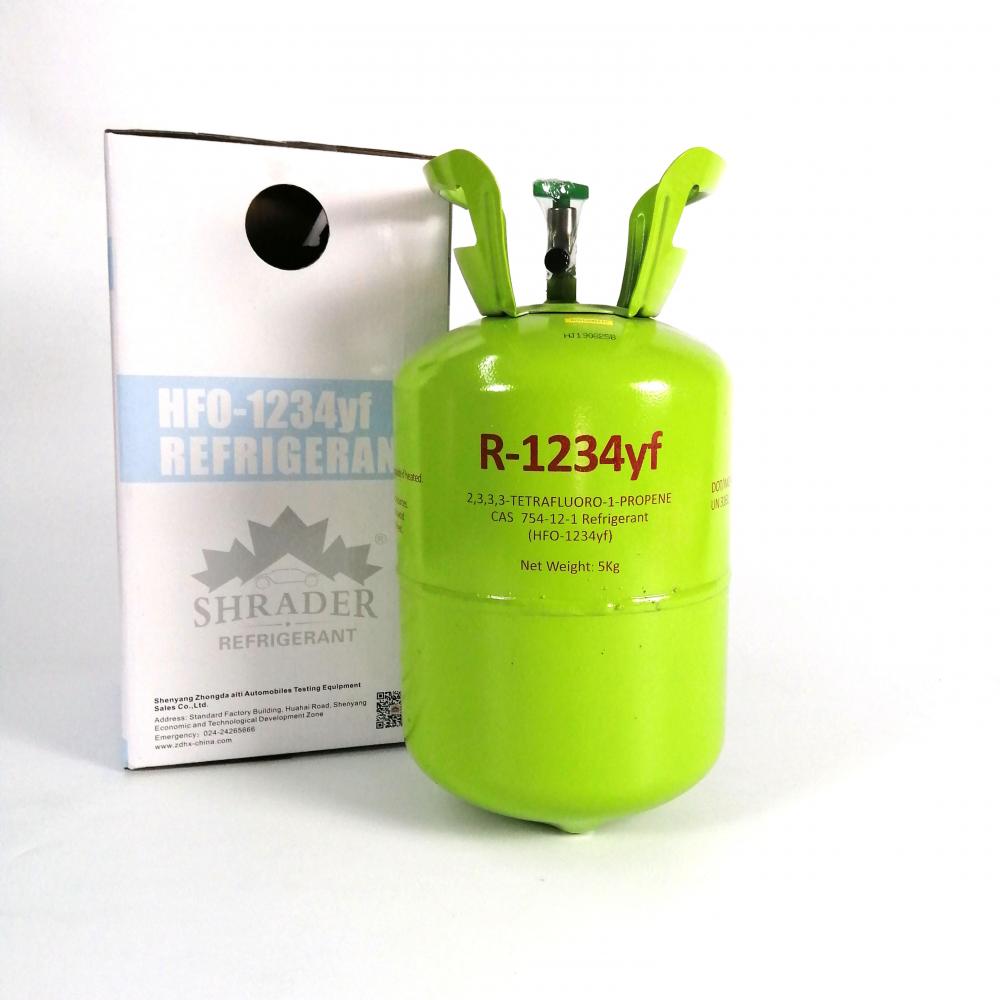
The R1234yf refrigerant was created as a result of the cooperation between the chemical giants, DuPont and Honeywell, who normally compete with each other. Their intention was to create a product that would meet the requirements of Directive 2006/40/EC (MAC Directive) concerning air conditioning systems in motor vehicles. Air conditioning systems of cars that received their type approval after 2011 were supposed to be filled with a refrigerant that would ensure a GWP value of <150. This was equivalent to eliminating the R134a refrigerant (GWP = 1430) in the long term. In practice, this provision started to apply from 1 January 2013 and from 1 January 2017 it applies to all new vehicles. Introducing the new refrigerant was not without controversies – its spontaneous ignition temperature is 405ºC, which, in the opinion of some car manufacturers (e.g. German Daimler), may cause a higher risk of fire originating from the air conditioning system in the case of a collision. Additionally, a by-product of HFO refrigerant combustion, namely hydrogen fluoride, constitutes a serious risk for e.g. rescue teams working at a burning car. However, studies conducted by the German government agency Kraftfahrt-Bundesamt, as well as those originating from the International Society of Automotive Engineers, show that in this case the risk of fire caused by spontaneous refrigerant combustion is negligible. Ultimately, even Daimler uses the R1234yf refrigerants in their vehicles, but with additional fire safeguards.
Shenyang Zhongda Huanxin Refrigeration Technology Co., Ltd.
JUL 18, 2022